This article first appeared in “Ambulance Today UK” – August 2019 edition
We will be exploring the advantages of being a critical thinking emergency medicine practitioner, and how it can positively benefit, us, our colleagues and our patients; and most importantly why we don’t really have an option, but to be critical thinkers.
In Rosen’s Emergency Medicine, Chapman, et al, describes the critical thinking process as having three parts: medical inquiry (history, physical exam and diagnostic testing), clinical decision-making (a cognitive process that evaluates information to diagnose or manage a patient’s condition) and clinical reasoning, which involves both medical inquiry and clinical decision-making.
The challenge of the EMS educator/facilitator is how to instil those three concepts into the practitioner’s patient care approach, as the result will be a more focussed practitioner who has learnt the value of critical thinking and life-long learning. Critically Thinking is to be desired by EMS providers at every level, yet the concept isn’t easily defined, quantified or taught.
That’s because critical thinking only becomes real in practice; clinicians, critical and lateral thinkers are moulded in the field. Theory, guidelines, protocols, linear thinking is learnt in the classroom. That is not to downplay the importance of class time, as that is the foundation on which critical thinking rests. What follows on, is experience, continuing education, currency of competency and clinical mentoring. Learning that patient treatment plans fit into the continuum of clinical reasoning, as all patients are different. On the streets, patients don’t follow the script as per your last patient simulation. Thus, the gravity of responsibility you have, becomes intimidating.
Carl von Clausewitz, in his treatise “On War” wrote “Any complex activity, if it is to be carried on with any degree of virtuosity, calls for appropriate gifts of intellect and temperament.”
This doesn’t mean that everyone who learns something, immediately becomes an expert. For the lifelong learner, everyone has something of value to contribute, irrespective of what environment or years of experience are on the table. Part of lifelong learning is contributing to the pool of knowledge. Effective teaching, just like effective learning, begins with listening before talking. Lifelong learning is a commitment to taking moments out of each day, reflecting on the processes and patients, pushing to improve our knowledge, skills, patient care and attitudes.
Every patient contact is a clinical mystery waiting to be solved, by you the (detective) practitioner. They are relying on your educational experience, critical thinking, your knowledge that you integrate and update continuously – right down to that “interesting paper” you read last night! No patients are created equal, today’s cardiac patient will not match tomorrows, not all cardiac arrests are equal. Hence, we cannot rely on overly simplistic guidelines/protocols We need to critically analyse each patient, rhythm strip, against our font of knowledge and our vested clinical practice guidelines.
Critical thinking skills ask of us, to use our brain, and not blindly follow a pre-set protocol; evidence-based medicine keeps changing and – using one’s brain as opposed to blindly following a protocol would be short sighted and not always in the best interest of optimal patient outcomes. Seeking, questioning, evaluating, integrating and sharing every day, is an opportunity to get better at our passion (chosen profession), where patients rely on us for their lives. Knowledge and decision-making should be based on clinical findings on that case on that day, it’s not just a set of psychomotor skills and blindly followed protocols.
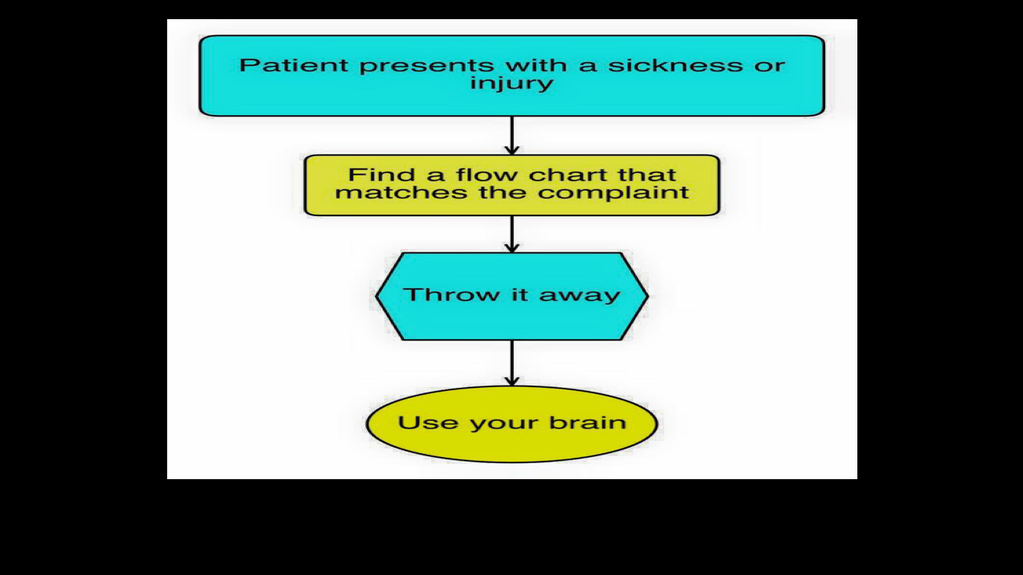
As a thoughtful science-based practitioner, learn to be iconoclastic, adopt a questioning, reflective approach to your practice. My mantra when looking at new and/or challenging concepts/modalities is as follows:
Is it evidence based, current, documented, cross referenced and is there a perceived bias (mine or the writers)?
All pre-hospital emergency care practitioners should strive to be clinicians/critical thinkers, irrespective of their level of care, age or experience. Continuous lifelong learning ensures competence and confidence, allowing you to have the lateral thinking skills to break the linear cookbook approach to patient care.
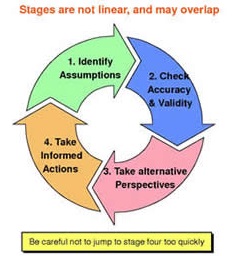
So, where to from here?
“Paramedics displayed the ability to problem solve, critically analyse, perform complex reasoning and work cohesively with the patient as well as in a group. They were adept at rapidly forming clinical impressions in the critically ill with minimal information, and were able to modulate their interventions accordingly, while simultaneously continuing to gather data as they performed life-saving measures. Experienced paramedics are seen to gather, process and utilise information differently to the new graduate, portraying an interconnectedness of conscious and sub-conscious processing drawing on information from multiple sources culminating from both professional and personal experiences.”
Paramedic judgement, decision-making and cognitive processing: a review of the literature Australasian Journal of Paramedicine: 2019;16 Meriem Perona, Muhammad Aziz Rahman, Peter O’Meara BHA
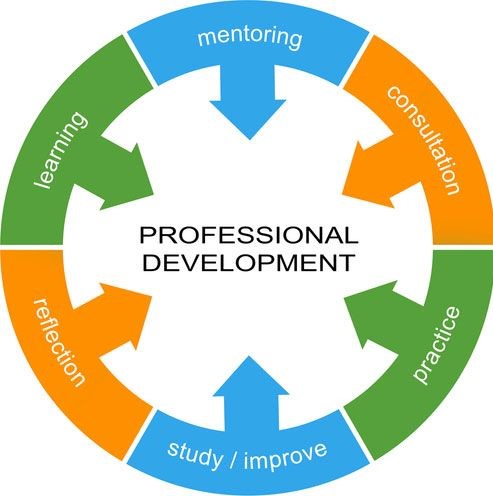
The implications of this need to be reflected in our practice through ongoing mentoring, partnering the experienced with the novice, reflection and feedback post scene time, all which will go some way to encourage improvement in skills, competency and learning, which then translates into improved patient outcomes.