Down to the River

After writing an article; The Art of Silence, and upon further reflection, I penned the following poem. In light of the books and music I have been indulging in of late; this took the poem down a darker path, than initially intended.

everybody should be quiet

near a little stream

where the wild roses grow

and just listen


down to the river we ride

be silent, listen to your heartbeat

take my hand, I'll take yours

to much madness and sorrow

the loudest words are not spoken

living in this age of rage


down to the river we go

walking towards the light

this beautiful place

wearing many guises

sending me down the river tonight

my baby and I


the river runs clear in the night

no words needed to uncover

an ability to let things go

take solace in the silence

an inner absence of preoccupation

masks the hidden messages of compliance


do you know where

the wild roses grow

down by the river

together you may get away

baptised in the river

cleansed

be delivered

© 2016 Michael D Emmerich

The Art of Silence

If I cast my eye over my writings for the past few years (poetry and creative), the subject of silence, solitude and solace, weighs heavy over the pages. When I then received an article from tweetspeakpoetryBook Club Announcement: The Art of Stillness which discusses a new book by Pico Iyer:  The Art of Stillness: Adventures in Going Nowhere (TED Books). I had pause to delve back into my writings and cast my net wider, across the subject of being silent in a noisy world, and how we need to learnt to cultivate, this lost art of being silent in a frenetic noisy world.

Thoughts, visions, imagery; evoking pictures of silence
Be silent, listen to your heartbeat, and just be
Silence; sometimes the loudest words are the ones not spoken

The writer of the tweetspeak article, LW Lindquist, speaks of the “space between our thoughts”. The importance of the said versus the unsaid, the importance of what is not said, in the moments of silence, which can carry more weight. It is this quest for the power of silence and the solace of the silence, which has been discussed by the likes of Marcel Proust, Mahatma Gandhi, Emily Dickinson and Josef Pieper (amongst others), who have found richness in stillness. The incredible insight that comes with making time for stillness.

In a TED talk by Pico Iyer: The art of stillness  he speaks about:

Our world of constant movement and distraction,
and he teases out strategies we all can use to take back a few minutes
out of every day, or a few days out of every season.

If you feel overwhelmed by the demands of the constant chase and rush, that our society at times demands of us, then I encourage you to devote 15 minutes of your rushed day, and listen to Pico, and then reflect, in silence.

During Leonard Cohen’s five year stay at a Zen monastery, he wrote the poems for his book: The Book of Longing, and he was also joined for a while by Pico Iyer, who writes in his book the Art of Stillness, that Cohen’s “name in the monastery, Jikan, referred to the silence between two thoughts.” It is worth stopping what you are doing and be invited into his (Cohen’s) world of beauty, women, and lonesome hours. It is an emotional journey, honest and direct, still, and sometimes lost.

Decades before the Benedictine monk David Steindl-Rast, sat contemplating on how we came to lose our ability to relax and be, and how it could be reclaimed. The very institutions of learning, that were once intended as a mecca of “leisure” and contemplative activity, presently prepare us for a lifetime of industrialized conformity.

Josef Pieper (German Philosopher  May 4, 1904–November 6, 1997) on his model of the three types of work: work as activity, work as effort, and work as social contribution, and how against the contrast of each a different core aspect of leisure is revealed.

Against the exclusiveness of the paradigm of work as activity
there is leisure as “non-activity” — an inner absence of preoccupation,
a calm, an ability to let things go, to be quiet.

A few years back when I was sitting relaxing with my love one Sunday afternoon, she commented:

I’m there, you’re there
We are silent in each other’s presence

Each engaged in our own thoughts/activities, but still at one; it inspired me to pen a sonnet: The Sonnet of Silent Conversations

the solace in the silence
where words are not needed to uncover
the hidden messages of compliance

The silence echoes around the enclosed walls of our minds, encouraging us to break down the alienation and find solace in the silence, and learn the importance of being silent, quiet, amongst those we feel close to, and then taking this silence out into the rushed and frenetic world in which we live. This can aid us to slow down, in this age of constant movement and immediate gratification. When speed is king, anyone or anything that gets in its way and slows the pace down, becomes the enemy. Thanks to speed, we are living in the age of rage. That too is ironic, the fast pace of life alienates more, than the comfort we can find in silence.

By opting out we do not have to drop out.

The Solace in the Silence
The Banality of Corporate Deceit

values, ethics, morals are left in tatters

conveniently sacrificed on the alter of economic greed

moral responsibility is abdicated in fiscal matters

bruised and cast aside for their misdeeds


it's not me, just following orders

it's not my department

I was just the warder

its all in separate compartments


careers built on careerism and obedience

orders coming from persons above

no regard for others, expedience

non ideological, and no thought of the actions thereof


as good as saying the devil made me do it

its gods will

the cry of the uncaring hypocrite

is enough to give the victim a chill


as the the chorus beats its drum

and the new song cuts to the core

the new mantra now oft chanted has become

oh for a few dollars more
© 2016 michael d emmerich
© 2019 michael d emmerich
© 2019 mikesnexus

An Idiot Wind Blows

a wind is sweeping the land
no wait, across our planet
the wind blows through the halls of power
no country is sacrosanct


mediocrity our new political watchword
on a good day!
on every other day
we would be considered blessed
to have mediocre leaders


the wind of the bigot
the ignorant
the illiterate autocrat
blows with vigour
no stone left unturned
all that stand in the way 
bashed, broken, ripped apart


theocracy takes flight
the hot air of idiocy
blows with venom
from the open gaping
vacuous mouths
of our elected leaders


even when they are eloquently
hoisted on their own petard
their praise singers and chorus lines
run to the fore
like court jesters of old


the halls are silent
laughter is absent
intentions are real, deceitful
wrestling power and control
from the blind electorate
who have realised to late
the error of their ballot cross
has now become a cross they cannot bear

© 2015 michael d emmerich

A Sonnet of Requited Passion

Trying my hand at writing a sonnet… lets see how it goes (my first sonnet) inspired by and dedicated to my wife 🙂

Oh the journey of danger

Begins with the form,

Of one who is not a stranger

But rather with a burning storm


Passions unleashed by ones love

As the dangerous flowing curves

Of her female form are void

Of all clothing and other womanly reserves


Laid bare to the silhoutte

Of the fading streaming golden sunlight,

As the two-tone colours on an artists palette

Raising raging desires to a height


All these passions can only be sated

Once heightened passions have abated


© 2015 Michael D Emmerich

The Ven of Life

Over the past few days a good friend of mine passed away, and upon his passing, and it has dragged me along to think of death, the fragile state of our existence and how quickly and unexpectedly the candle can be snuffed out. It made me remember something my dad said before he died: that its a sad day when you get to the stage of your live when your friends start to die around you … having lost a few friends of late, all in their mid 50’s, I have had cause to gaze introspectively at my navel, and just contemplate life.. and all its joys, friends, family and time spent with them, recollections of past events/encounters, and all the pleasure that these interactions have brought.

For those who know me, they would say that it is an irony that I get so closely caught up in death, with all its pain and emotion, seeing as though I have seen so much of it in my career, in so many places and caused by so many different events. All that prevents me from getting dragged into the quagmire of death; is my ability to insulate myself, build a wall…although that has also been to my own detriment, and I have, of late become more immersed in the death and pain which I encounter in my daily walk.

All these thoughts, emotions and reflections have moved me to pen this poem:

The Ven of Life

all that we are and have is our emotions

interactions and experiences

all that we have is the ven of our lifes

as we journey through life we cross paths with strangers

friends, family and loved ones


it is these paths that cross

intersect which drag us into the ven

the bigger the interaction the greater the ven

the more we interact the more we ven

we cannot exist without interacting


the extent of our interactions increases our circle

the more we interact the more we overlap

seeking to be apart of the greater universal circle

the commonality of our existence increases our ven

the more walls we break down the more we interact

the more expose ourselves to risk and become more fragile


this fragility increases our ven

which then enriches our lives

only through the ven of life
can we fully enjoy and appreciate

all that life has to offer

so ven on!

© 2015 Michael D Emmerich

Thoughts on getting lost as a means of finding oneself…

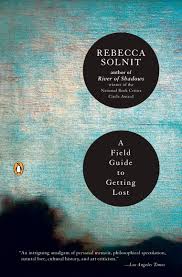
Rebecca Solnit, whose mind and writings are among the most consistently enchanting of our time, explores this tender tango with the unknown in her altogether sublime collection of essays in A Field Guide to Getting Lost 

I thoroughly enjoy her writings, having indulged in a few of her books and essays. And Getting Lost is one of the more personally transformative collection of essays I have had the pleasure of reading. Solnit, explores themes and issues of uncertainty, trust, loss, memory, desire, and our place on this planet.

Solnit writes in the opening essay:

Leave the door open for the unknown, the door into the dark. That’s where the most important things come from, where you yourself came from, and where you will go. The things we want are transformative, and we don’t know or only think we know what is on the other side of that transformation. Love, wisdom, grace, inspiration — how do you go about finding these things that are in some ways about extending the boundaries of the self into unknown territory, about becoming someone else?

Henry Miller wrote: “On how one orients himself to the moment, depends the failure or fruitfulness of it.” we are all apart of this transitional process called – Life.

“There is an illusion of ‘end,’ a stasis seemingly like death. But it is only an illusion. Everything, at this crucial point, lies in the attitude which we assume towards the moment.”

Henry Miller

T.S. Eliot’s poem Four Quarters –  expounds on the journey of life and its self discovery, and ultimately learning to know ourselves. we are on a never-ending lifelong journey of exploration – of our self, environment, the world in which we live.Life is a destination, but prehaps we never really travel further than we really are at this present moment, all that changes is our understanding of the now …

“We shall not cease from exploration
And the end of all our exploring
Will be to arrive where we started
And know the place for the first time.”
T. S. Eliot, Four Quartets

The things we want are transformative, and we don’t know or only think we know what is on the other side of that transformation. Sometimes we have to lose ourselves to find ourselves. Never to get lost is not to live.

index