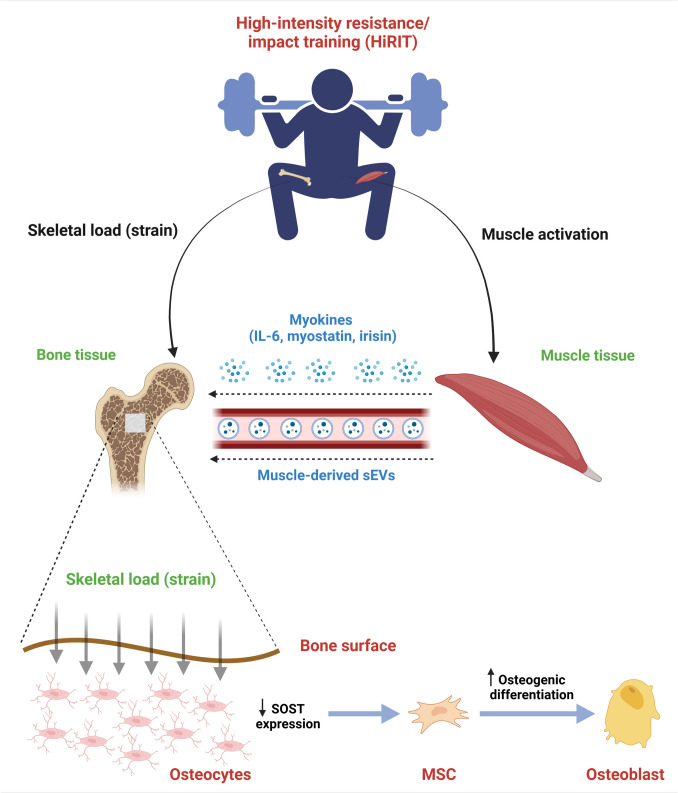
The LIFTMOR trial results are overwhelmingly good, delivering a groundbreaking shift in how medical professionals approach exercise for bone health. Published in the Journal of Bone and Mineral Research, the LIFTMOR Randomized Controlled Trial proved that high-intensity resistance and impact training (HiRIT) safely increases bone density in postmenopausal women and men with osteopenia or osteoporosis. Women with osteopenia or osteoporosis have traditionally been advised to exercise cautiously and avoid heavy lifting. LIFTMOR challenges this approach, by asking an important question: Can postmenopausal women with low bone density safely lift heavy enough to stimulate stronger bones?
Core Study Design
LIFTMOR stands for Lifting Intervention for Training Muscle and Osteoporosis Rehabilitation. This randomized controlled trial included 101 postmenopausal women with an average age of 65. All had osteopenia or osteoporosis at the hip, spine, or both. The LIFTMOR trial was a high-quality research investigation of exercise for postmenopausal women with low bone mass.
- Participants: 101 postmenopausal women with osteopenia or osteoporosis (average age 65).
- Intervention: High-Intensity Resistance and Impact Training (HiRIT).
- Comparison: A low-intensity home-based exercise control group.
- Frequency: Twice weekly for 30 minutes, over an 8-month period.
Key Exercises Used
- Barbell deadlifts
- Back squats
- Overhead military presses
- Jumping chin-ups with drop landings (for impact loading)
The Core Results
Prior to this trial, medical guidance typically restricted individuals with low bone density to gentle, low-impact movements out of fear of causing fractures. The trial compared an 8-month, twice-weekly program of heavy compound lifting (at 80–85% of 1-repetition maximum) against a low-intensity, home-based routine.
The findings dramatically favoured the heavy lifting group:
- Functional Performance: Participants showed vast improvements in stature (height retention), back and leg strength, and functional balance metrics, which directly reduces fall risks.
- Exceptional Safety: Under expert supervision, there were zero fractures and only one reported minor adverse event (a temporary lower back spasm) during the primary trial.
The Caveat: “Good” Comes With Strict Conditions
While the data itself is highly positive, physical therapists and bone health experts emphasize that the protocol is only “good” if executed under specific parameters:
- Expert Supervision is Mandatory: The exercises utilized—barbell back squats, deadlifts, overhead presses, and jumping chin-ups with flat-footed landings—carry high structural risks if alignment is lost.
- Prior Screening: The original trial rigorously screened participants to filter out severe comorbidities. Undertaking this exact protocol at home without an assessment or professional coaching introduces a high risk of vertebral compression fractures or joint strain.
The high-intensity program centred on four movements: the deadlift, back squat, overhead press, and a jumping chin-up with a drop landing.
After an initial period focused on learning proper technique, the three resistance exercises were performed for five sets of five repetitions at greater than 80–85% of one-repetition maximum. In practical terms, these were genuinely heavy loads—not light weights performed for many repetitions.
What did the researchers find?
- Bone Density: The HiRIT group gained roughly 3% to 4% in lumbar spine bone mineral density and about 2% in the femoral neck (hip), whereas the control group continued to lose bone density.
- Physical Function: Marked improvements occurred in functional performance, dynamic balance, and muscular strength (gains of 25–35%).
- Safety: The high-intensity regimen was well-tolerated with high compliance and virtually no serious adverse events under professional supervision.
After eight months, lumbar-spine bone mineral density increased by approximately 2.9% in the high-intensity group. In contrast, the low-intensity group lost about 1.2%.
At the femoral neck, bone density was essentially maintained in the high-intensity group, increasing by approximately 0.3%, while the control group lost approximately 1.9%. Preventing the expected decline at the hip may itself be an important benefit.
The high-intensity group also demonstrated favourable changes in femoral-neck cortical thickness. Cortical bone forms the strong outer shell of bone and contributes substantially to the hip’s ability to tolerate loading.
More than stronger bones
LIFTMOR also produced substantial improvements in physical function. Leg and back-extensor strength increased by approximately 35–36%, and participants improved their sit-to-stand ability, functional reach, mobility, and vertical-jump performance.
This matters because fracture risk is influenced by more than bone density. Strength, balance, mobility, and the ability to recover from a misstep can all affect the likelihood of falling—and whether a fall results in injury.
The Bottom Line
The LIFTMOR trial helped overturn the assumption that women with low bone density should train only with light weights. Its message is not simply “lift heavy.”
With appropriate screening, progressive loading, excellent technique, and qualified supervision, postmenopausal women can train at high intensity—and may meaningfully improve bone density, strength, and physical function. For more info or one to one consults please reach out ..
References:
https://pubmed.ncbi.nlm.nih.gov/28975661
https://pubmed.ncbi.nlm.nih.gov/30861219

